|
|
| Ulrico Schmidel,
Chronicles.
Engraving, 1599. |
|
|
| First Edition of
El Gaucho Martín Fierro. |
|
|
| José Mármol. |
|
|
| From 1810 to 1879 Within
the panorama of Latin American letters, the origin of Argentine literature
lacks the American Indian features distinguishing, for instance, those
of Mexico and Peru. The earliest records are chronicles of foreign
travelers: Ulrico Schmidel, Martín del Barco Centenera
and Ruy Díaz de Guzmán. Luis de Tejeda,
a disciple of Góngora and St. Juan de la Cruz, is the first
Argentine poet. In colonial or "viceroyal" times (pseudo-classical,
baroque and epic), letters grow sheltered by the zeal of independence:
Vicente López y Planes, Pantaleón Rivarola
and Esteban de Luca. There appeared the first outlines of gauchesca:
Bartolomé Hidalgo, Hilario Ascasubi and Estanislao
del Campo, a native genre reaching its peak with Gaucho Martín
Fierro, by José Hernández, which is representative
of national feeling and spirit. The break with Spanish tradition
in favor of French romanticism supporting the return to popular sources
and medieval past, allowed Esteban Echeverría, its main
follower, to be the writer of the first local and realistic short
story: El matadero (The Slaughterhouse), and of La cautiva
(The Captive Woman), a poem where the Pampa setting is fundamental.
A mature literature in intellectual and political terms started
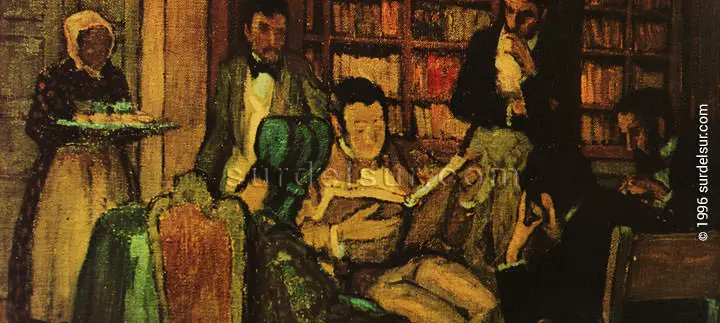
to flourish. By mid-19th century, José Mármol
publishes the first Argentine novel Amalia. While poetry diminishes
its warlike mood and turns to the anecdotal and sentimental: Carlos
Guido y Spano and Ricardo Gutiérrez, chronicles
of manners: Vicente Fidel López, Lucio V. Mansilla
and Juana Manuela Gorriti and historical accounts: Bartolomé
Mitreand Domingo F. Sarmiento, are records of the spirit
of national organization. |
| Continue... |
| Luis
Ricardo Furlán |
|